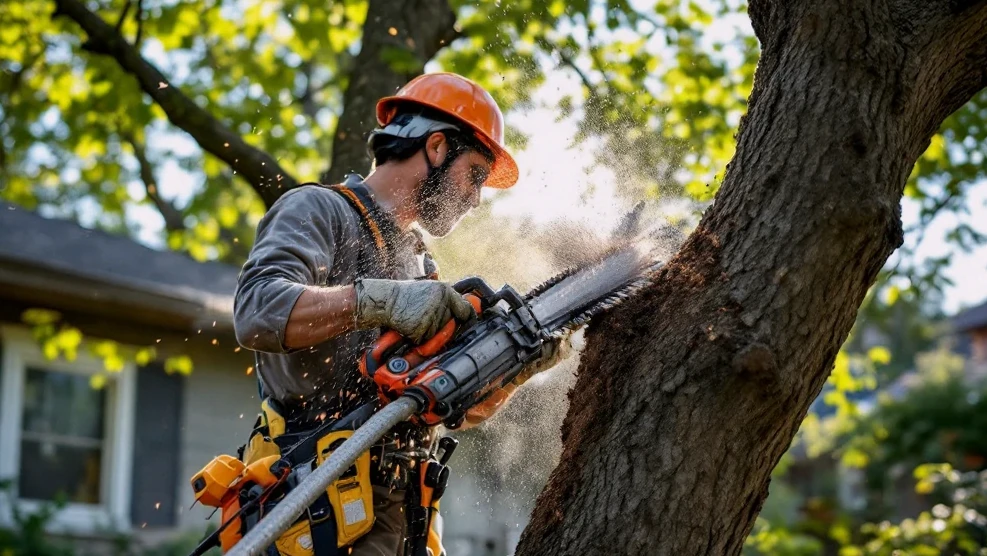
What is Tree Trimming and how does it work?
Tree trimming is the selective removal of branches to improve a tree's health, shape, or safety. It's not the same as topping or removal. A crew assesses the tree, makes precise cuts at the branch collar, and cleans up the debris before they leave.
Most homeowners picture a guy with a chainsaw hacking at branches. That's not it. Trimming is a deliberate process. We look at the whole tree, figure out which branches are dead, diseased, or rubbing against each other, and then decide what needs to come off. The goal is to keep the tree strong and let it grow the way it should.
The work happens in steps. First, we walk the property and check the tree's condition. Then we set up ropes and rigging if the branches are high or close to your house. We cut with sharp tools, making clean cuts just outside the branch collar, which is the swollen area where the branch meets the trunk. That cut helps the tree heal fast and keeps decay from getting in.
You might hear terms like "crown cleaning," "crown thinning," or "crown raising." Those are just different goals. Crown cleaning removes dead or dying branches. Thinning opens up the canopy so wind passes through. Raising lifts the lower branches so you can walk under the tree or see your yard. We'll often combine a few of these depending on what the tree needs.
Tree trimming isn't a one-size-fits-all job. A young maple in a backyard needs different cuts than a mature oak near a driveway. That's why we never quote a price over the phone without seeing the tree first. The condition, size, and location all change the work.
One thing that surprises people: trimming is not the same as topping. Topping means cutting a tree's main branches down to stubs to reduce its height. That's harmful and we don't do it. It leaves the tree weak and prone to breakage. Trimming works with the tree's natural structure, not against it.
- Tree trimming removes specific branches, not whole sections.
- Clean cuts at the branch collar help the tree heal.
- Different goals: cleaning, thinning, raising, or reducing.
- Topping is harmful and not the same as trimming.
Short version
- Trimming is selective branch removal for health, shape, or safety.
- It's not topping or removal.
- A crew assesses, cuts, and cleans up.
- Costs depend on tree size and condition.
How Tree Trimming works, start to finish
A trimming job follows a clear sequence: assess the tree, set up safety gear, make the cuts, and clean up. Each step matters, and missing any of them can leave you with a damaged tree or a messy yard.
We start with a walk around. We look at the tree's species, age, and health. We check for cracks, hollow spots, or branches hanging over your roof. That tells us what kind of cuts we need and whether we'll need extra equipment like a bucket truck or just a ladder and ropes.
Next comes setup. If the tree is near your house, we'll tarp off the area and set up rigging to lower branches safely. That keeps your gutters and flower beds safe. We also put on our climbing gear, which includes a safety line, ropes, and a helmet. Safety is the first part of the job, not an afterthought.
The cuts themselves are the core. We use handsaws for small branches and chainsaws for bigger ones. Every cut is made at the branch collar, not flush with the trunk. That leaves a small wound that the tree can seal over. We never leave stubs, because stubs invite pests and rot.
After the branches come down, we deal with the debris. Some crews blow leaves and haul away nothing. We rake, sweep, and load the branches into our truck. If you want the wood for firewood, we'll cut it to length and stack it. Otherwise, it goes with us.
Finally, we do a walkthrough with you. We show you what we cut and why. If we spotted a problem like a cracked limb or a hollow trunk, we'll tell you. That's the kind of info you don't get from a cheap crew that just drops branches and leaves.
The whole job can take anywhere from a couple of hours for a small tree to a full day for a large oak. It depends on the tree's size, how many branches need to come down, and how hard it is to reach them. A tree with tight access to a backyard takes longer than one right by the driveway.
- Assess the tree.We check species, health, and hazards to plan the cuts.
- Set up safety.Rigging, tarps, and climbing gear protect your property and our crew.
- Make the cuts.Clean cuts at the branch collar help the tree heal.
- Clean up.We haul away branches and debris, leaving your yard tidy.
Why Tree Trimming matters for your home
Trimming keeps your trees healthy, your home safe, and your yard looking good. It prevents branches from falling on your roof, lets sunlight reach your lawn, and stops disease from spreading through the canopy.
A branch that hangs over your roof is a risk. A heavy storm or a gust of wind can snap it, and that's how you get a hole in your shingles. Regular trimming removes weak branches before they become a problem. It's a lot cheaper to cut a limb than to repair a roof.
Trees that rub against your house can damage siding and gutters. Bark gets worn away, and that opens the door to insects and rot. Trimming keeps a clearance of a few feet between the tree and your home, which also makes it harder for squirrels and other critters to get onto your roof.
Sunlight matters. A dense canopy can shade your lawn so much that grass won't grow. Thinning the crown lets light filter through, which helps your grass and garden thrive. It also improves air circulation, which reduces the chance of fungal diseases.
Dead branches are more than an eyesore. They're a hazard. They can drop without warning, and if you've got kids playing underneath, that's a risk you don't want. Trimming removes those branches and makes the tree safer for everyone.
There's also the health of the tree itself. When branches rub against each other, they create wounds. Over time, that can kill a branch or even the whole tree. Trimming separates those branches and lets the tree focus its energy on healthy growth.
A well-trimmed tree also boosts your curb appeal. It looks neater, and it can even raise your property value. That's a nice bonus, but the main reason to trim is to keep the tree and your home in good shape.
Branches touching your roof
Rubbing can wear away shingles and let water in. Trim before the next storm.
Dead or hanging branches
These can drop anytime. Get them removed before they fall on a car or person.
Cracked trunk or major split
This is a structural failure waiting to happen. Call a professional immediately.
Common problems and what causes them
Most tree problems come from neglect, bad pruning, or storm damage. Homeowners often wait too long to trim, or they hire someone who makes cuts that hurt the tree. Knowing the signs helps you catch issues early.
One of the most common issues we see is overgrown branches that have been rubbing against the house for years. The bark is worn off, and sometimes the siding is already damaged. That's a sign that trimming was put off too long. The fix is straightforward, but the damage to the house might already be done.
Another frequent problem is "lion's tailing," which happens when someone strips all the inner branches and leaves a tuft of foliage at the end. That makes the branch heavy and prone to snapping. It's a bad pruning practice, and it can take years to correct. If you've had a crew do that to your tree, you might need to have it reworked over time.
Storm damage is a big one in Huntsville. We get thunderstorms and occasional tornadoes, and those can leave trees with split branches or torn bark. A split branch that's still attached is dangerous. It can fall at any moment. We often have to remove that branch entirely to keep the tree stable.
Disease is another culprit. Fungal infections can cause branches to die and leaves to wilt. If you see mushrooms growing on the trunk or branches, that's a sign of internal rot. That tree might need more than a trim; it could be at risk of falling. We'll tell you if that's the case.
Pests like borers can weaken branches too. You might notice small holes in the bark or sawdust at the base. Trimming can't fix an infestation, but it can remove the most affected branches and slow the spread. Sometimes, the tree needs to come down entirely.
Finally, there's the issue of improper cuts from a previous job. If someone topped a tree or made flush cuts, the tree may have developed weak growth or decay. That's a problem we can often correct over a few trimming cycles, but it takes patience.
The best way to avoid these problems is to have your trees inspected and trimmed on a regular schedule. For most trees, that's every 2 to 3 years. Some fast-growing species, like silver maples, might need it every year. We'll let you know what your trees need.
A clean cut at the branch collar is the difference between a tree that heals and one that rots.
Frequently Asked Questions
How much does tree trimming cost in Huntsville?
Small trees under 30 feet generally run $300 to $800, medium trees 30 to 60 feet cost $800 to $1,500, and large trees over 60 feet can cost $1,500 to $2,500 or more. (hsvtreepros.com) Some companies advertise a lower starting price, like $171, but that's usually for a small, simple job. (lawnstarter.com) The only way to get an exact number is a free on-site quote.
How often should I have my trees trimmed?
Most trees do well with a trim every 2 to 3 years. Fast growers like silver maples or willows might need it every year. If you have branches touching your roof or dead limbs hanging, don't wait for the schedule; call us sooner.
Can I trim my own trees?
You can handle small branches near the ground with hand pruners, but anything above your head or near power lines is a job for a professional. A fall from a ladder is a risk, and a bad cut can damage the tree for years.
What's the difference between tree trimming and tree pruning?
They're often used interchangeably, but pruning is a broader term that includes trimming. Trimming usually focuses on shaping and removing overgrowth, while pruning can also involve removing dead wood or improving fruit production. For most homeowners, the terms mean the same thing.
Is tree trimming bad for the tree?
No, when done correctly. Clean cuts at the branch collar help the tree heal. But topping or over-trimming can stress the tree and make it weak. That's why you want a crew that knows what they're doing.
What time of year is best for tree trimming?
Late winter or early spring is often ideal because trees are dormant and it's easier to see the structure. But dead or hazardous branches can be removed any time. We avoid trimming certain species, like oaks, during the spring to prevent the spread of oak wilt.
Do I need to be home during the trimming?
It's a good idea to be there at the start so we can walk the property and answer any questions. After that, you can leave if you'd like. We'll do a final walkthrough when we're done.
Will you haul away the branches?
Yes. We rake, sweep, and load all the debris into our truck. If you want firewood, we'll cut it to length and stack it. Otherwise, it goes with us.
What if a branch falls on my house during the job?
We carry liability insurance and workers' comp, so you're covered if something goes wrong. That's another reason to hire a licensed crew instead of a guy with a truck and a chainsaw.
How do I know if my tree needs to be removed instead of trimmed?
If the trunk is split, the tree is leaning heavily, or you see large dead patches, it might be beyond saving. We'll give you a straight assessment. Sometimes a tree looks bad but can be saved with a good trim.
Sources
Need tree trimming in Huntsville? Get a free estimate today.
📞 256-581-8736