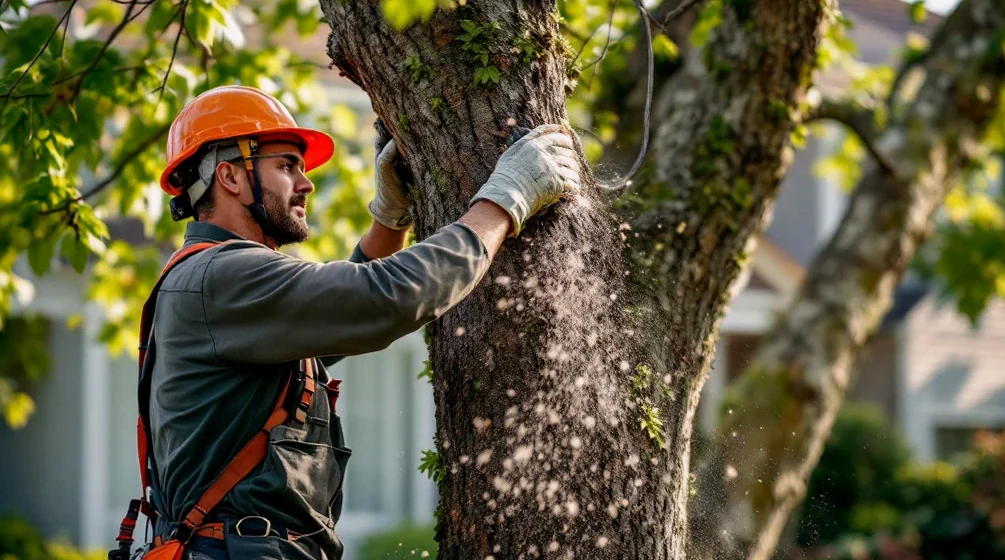
What is Tree Trimming and how does it work?
Tree trimming is selectively removing branches to improve a tree's health, shape, or safety. It's not the same as topping or removal. We cut with a purpose: to clear structures, balance the canopy, or let light and air through.
A good trim starts with a walk around your property. We look at species, branch structure, and what's nearby: your roof, your driveway, the power line running along the back fence. Then we climb or use a bucket truck and make cuts that the tree can heal on its own. A clean cut just outside the branch collar, the swollen ring where the branch meets the trunk, lets the tree seal the wound. A flush cut or a torn stub leaves it open to insects and rot.
The work itself is more than snipping. We thin out crossing branches that rub and wear each other down. We raise the canopy so you can walk under it or see down the street. We reduce the weight on a long limb that hangs over your house. Each cut changes how the tree grows next season, so we think a few years ahead, not just about how it looks this afternoon.
In Huntsville, the red clay and the summer heat push trees to grow fast, especially water oaks and maples. That growth is why a tree you trimmed three years ago might already be brushing the gutters again. Trimming is routine maintenance, like changing the oil. It keeps the tree from becoming a problem before it becomes one.
Short version
- Trimming removes specific branches for health, safety, or shape.
- It is not topping, which is cutting the top off and harms the tree.
- A pro crew makes cuts that heal, not stubs that rot.
- Regular trimming every few years prevents bigger problems later.
How Tree Trimming works, start to finish
We start with a free walkthrough, then send a crew with the right gear, make the cuts, and clean up every branch and leaf. The whole job usually takes a few hours, depending on the tree's size and how much we're taking off.
The first step is the estimate. We walk your yard, point out what we'd trim and why, and give you a price on the spot. No pressure, no surprises. We also check for access: is there room for a bucket truck, or do we climb? That matters because it affects how long the job takes. A narrow side yard where we have to haul branches by hand adds time, and that shows up in the quote.
On the day of the job, we set up. If we're using a bucket truck, we position it on solid ground, not soft clay that could let it sink. If we're climbing, we tie in with ropes and saddle up. We use handsaws and pruning shears for the fine work, and a chainsaw for the bigger limbs. Every cut is deliberate. We never just hack at the tree.
For a limb over your roof, we might use a lowering line to ease it down instead of dropping it. That protects your shingles and the gutters. We cut in sections, starting from the tip and working back to the trunk. That way the heavy end never gets a chance to swing and tear the bark.
When the trimming is done, we clean up. All the branches get fed through a chipper or hauled off. We rake the leaves and sweep the driveway. What you're left with is a tree that looks like it grew that way, and a yard that looks like we were never there. Most of our Huntsville jobs wrap up in half a day, but a big oak with a lot of deadwood can take a full day.
- Walkthrough and quote.We inspect the tree, note hazards, and give you a firm price before any work starts.
- Setup and safety.Bucket truck or climbing gear goes in, and we clear the drop zone below.
- Selective cuts.We remove dead, crossing, or overhanging branches, cutting just outside the branch collar.
- Debris cleanup.Branches are chipped or hauled off, and we rake and sweep the site clean.
Why Tree Trimming matters for your home
Regular trimming keeps branches off your roof, out of power lines, and away from your siding. It also keeps the tree healthier, which means fewer dead limbs dropping in a storm. For a Huntsville home, that's the difference between a routine job and an emergency call.
Your roof is the big one. A branch rubbing against shingles wears away the protective granules, and over time that leads to leaks. In a windstorm, a limb can scrape or puncture the roof deck. Trimming those branches back a few feet gives your roof room to breathe and keeps the moss and debris from piling up in the gutters.
Power lines are another reason. Huntsville Utilities keeps the main lines clear, but the service line to your house is your responsibility. A branch that touches that line during a storm can pull it down or start a fire. We trim with clearance in mind, keeping branches well away from the drop.
Then there's the tree itself. A tree that's thinned out lets wind pass through the canopy instead of pushing against it like a sail. That reduces the chance of a whole limb snapping off in a summer thunderstorm. We also cut out deadwood, which is the first thing to come down in a storm and the most likely to hit something.
Finally, trimming keeps your yard usable. A low branch that blocks your view of the street or scrapes the top of your car is a nuisance you don't have to live with. Raising the canopy opens up the yard and lets sunlight reach your grass. It's one of those things that makes the whole property feel better.
Branches near the roof
If a limb is within a few feet of your shingles, plan a trim soon. It's not an emergency, but it's wearing on your roof.
Deadwood over the house
Dead branches hanging over your roof or driveway are a storm hazard. Schedule a trim before the next big wind.
Branch touching power lines
If a limb is touching or leaning on the service line, call us right away. That's a fire and safety risk.
Common problems and what causes them
Most tree problems we see in Huntsville come from years of neglect or bad cuts. Topped trees, stubs left to rot, and branches rubbing on roofs are the usual suspects. Each one has a fix, but some take longer than others.
Topping is the worst. Some outfits or desperate homeowners cut the top of a tree off to reduce its height. That leaves huge stubs that can't heal. The tree responds by sending up a mess of weak shoots, which are more likely to break in a storm than the original branch ever was. If a tree's been topped, we can sometimes clean it up and guide the new growth, but it's a multi-year project.
Stubs are another one. A cut made too far from the trunk leaves a stub that rots from the end. Over time, that rot can travel into the main trunk and hollow it out. We see it all the time in older oaks. The fix is to cut back to the branch collar, but if the rot has spread, the tree may be beyond saving.
Rubbing branches are a quieter problem. Two limbs cross and rub each other every time the wind blows. The bark wears away, and the wound becomes an entry point for insects and disease. Trimming out one of the two is a simple fix, but it takes a trained eye to spot which one to keep.
Then there's the branch that's already cracked. A split in a major limb can be a ticking time bomb, especially with Huntsville's spring storms. We can often cable or brace it to hold it together, but sometimes the only safe move is to remove the limb. We'll tell you straight which one it is.
A clean cut heals; a stub rots. That one difference is why a pro trim is worth the cost.
Frequently Asked Questions
How often should I have my trees trimmed in Huntsville?
Most trees do well with a trim every 2 to 3 years. Fast growers like water oaks and maples might need it more often, especially if they're near your house. Slow growers like oaks can go longer. We'll tell you at the estimate how soon your tree needs it again.
What's the difference between tree trimming and tree pruning?
Trimming usually means shaping the tree and clearing branches away from structures. Pruning is more about the tree's health, like removing dead or diseased wood. In practice, we do both in the same visit. A good trim includes pruning out the dead stuff.
Is tree trimming the same as topping?
No. Topping is cutting the top of the tree off to reduce its height, and it harms the tree. Trimming makes selective cuts to shape the tree and keep it healthy. We never top trees, and if someone suggests it, that's a red flag.
Do I need to be home during the tree trimming?
It helps if you're there for the estimate so we can walk the property together. On the day of the job, you don't need to be home, but we do need access to the yard. If you have a gate or a dog, let us know ahead of time.
Will tree trimming hurt my tree?
Done right, no. A proper cut just outside the branch collar lets the tree seal the wound. Done wrong, like a flush cut or a stub, it can lead to rot and decay. That's why the skill of the person making the cut matters more than the saw.
What happens to all the branches after you trim?
We chip most of the smaller branches and haul the bigger logs away. We also rake and sweep the work area so you're not left with a mess. If you want to keep some firewood, just say so and we'll set it aside.
Can you trim a tree that's close to power lines?
For the service line to your house, yes, we can trim with proper clearance. For the main power lines on the street, that's Huntsville Utilities' job. If a branch is touching the main line, call them first. We'll handle the rest.
How much does tree trimming cost in Huntsville?
It depends on the tree's size, how much needs to come off, and how hard it is to access. A small tree with a quick trim runs less, while a large oak over your roof with a lot of deadwood costs more. The only way to get an exact figure is a free on-site quote, and we're happy to give one.
What's the best time of year to trim trees?
Late winter or early spring is ideal for most trees because they're dormant and will heal fast in the spring growth. But we trim year-round in Huntsville. Deadwood and storm damage can't wait for a calendar date, so we'll work around the season.
Do you clean up the yard after trimming?
Yes, every time. We chip the brush, haul off the logs, and rake the leaves. We leave the site as clean as we found it, if not cleaner. You shouldn't have to spend your weekend hauling branches after we leave.
Need tree trimming in Huntsville? Get a free estimate today.
📞 256-581-8736